DECOLONIAL

BY DESIGN

THE
CREATIVE
BRIEF.

THE
CREATIVE
BRIEF.

a decolonial-ecofeminist-based-programme for branding, comms and culture-makers*
who want to create and communicate their work in ways that disrupt supremacy narratives and co-author futures of mutual flourishing.

a decolonial, ecofeminist programme for branding, comms and culture-makers*
who want to create and communicate their work in ways that disrupt today's supremacy narratives, while co-authoring abundant futures.

dear culture-maker,

what happens when you view your work as a dialogue?

You could be a brand strategist, journalist, filmmaker, artist or researcher. A therapist, language coach, event planner, policymaker, landscape gardener or educator.

But at your core, you're a culture-maker.

Whatever your audience or community size; whether you primarily operate online or offline, how you approach, position and express your work contributes to shaping our collective culture.

Your work in the world says something.

About what and who you value. The ideas you celebrate. The concepts you marginalise. The regions you care about and the regions you don't. Your definitions of success, growth, legitimacy, value, community and love.

All of it.

The way you express your work becomes part of our collective dialogue. It influences how we relate to one another and the living world, and which stories write the futures we create.

This is narrative power.

The Creative Brief is a companion for exercising that power with greater intention: creating and communicating your work in ways that centre relationality, restoration and the redistribution of power.

You could be a brand strategist, journalist, filmmaker, artist or researcher. A therapist, language coach, event planner, policymaker, landscape gardener or educator.

But at your core, you're a culture-maker.

Whatever your audience or community size; whether you primarily operate online or offline, how you approach, position and express your work contributes to shaping our collective culture.

Your work in the world says something.

About what and who you value. The ideas you celebrate. The concepts you marginalise. The regions you care about and the regions you don't. Your definitions of success, growth, legitimacy, value, community and love.

All of it.

The way you express your work becomes part of our collective dialogue. It influences how we relate to one another and the living world, and which stories write the futures we create.

This is narrative power.

The Creative Brief is a companion for exercising that power with greater intention: creating and communicating your work in ways that centre relationality, restoration and the redistribution of power.

but first,

What do we mean
by 'decolonial'
'ecofeminist'
or 'narrative power'?

Decoloniality focuses on examining and healing the harms caused by the cultural dominance of Eurocentric ideologies and power structures.

Ecofeminism links the oppression of women with the exploitation and degradation of the natural world and indigenous people.

Narrative power is the ability to shape social reality, cultural norms, identity, and power dynamics through intentional storytelling, framing, and the transmission of worldviews.

All three are deeply entangled.

The birth of commercial branding in the West, went hand in hand with the need to justify colonialism and patriarchy, using 19th century branding goods to promote racist and sexist ideologies that would normalise the extractive logic of these systems.

Branding and marketing were chosen as the primary vehicles due to their powerful culture-shaping mechanics.

But branding is not inherently colonial.
It's an artform with a rich history within indigenous contexts.

Ultimately, its power rests on how it's used.

With this in mind, DBD equips you to use branding and marketing to contribute to decolonial futures.


Decoloniality focuses on examining and healing the harms caused by the cultural dominance and symbolic violence of Eurocentric ideologies and power structures.

Ecofeminism links the oppression of women with the exploitation and degradation of the natural world and indigenous people.

Narrative power is the ability to shape social reality, cultural norms, identity, and power dynamics through intentional storytelling, framing, and the transmission of worldviews.

All three are deeply entangled.

The birth of commercial branding in the West, went hand in hand with the need to justify colonialism and patriarchy, with 19th century branded goods used to promote racist and sexist ideologies that would normalise the extractive logic of these systems.

Branding and marketing were chosen as the primary vehicles due to their powerful culture-shaping mechanics.

But branding is not inherently colonial.
It's an atform – with a rich history within indigenous contexts too.

With this in mind, DBD is designed to support the use of those vehicles to drive decolonial futures.

VISIT HERE FOR A SHORT READ

READ THIS SHORT PIECE

ON the colonial history of branding

(you might prefer to watch this short video instead)

(or watch this short video instead)

we don't live
in a man's world.
we live
in a yang world.

One that privilges
the masculine principle of yang
over the feminine principle of yin

we don't live
in a man's world.
we live
in a yang world.

One that privilges
the masculine principle of yang
over the feminine principle of yin

One that privilges the masculine principle of yang
over the feminine principle of yin

the original
backgrounding

The colonial, capitalist and patriarchal systems that currently dominate are rooted in the logic of extraction.

These systems depend on an 'other' to make less-than. To exploit people, places and ecologies, these systems first have to devalue them, obscure their contributions or position them as dormant resources to be used.

This is what we call backgrounding.

Ecofeminist Vandana Shiva links this dominance logic
to a lack of ecological humility: an unwillingness to submit to the relationality at the heart of our collective ecosystem.

Men's interdependence with women. Humanity's African and broader Indigenous origins. Our dependence on nature. Indigenous ways of knowing that have grounded our connection to each other and our place as part of nature for millennia.

The logic of dominance & extraction that fuels colonialism, capitalism, patriarchy and ecocide has disproportionately impacted four central sites:

The colonial, capitalist and patriarchal systems that currently dominate are rooted in the logic of extraction.

These systems need an 'other' that it can make less-than, or 'background', to justify exploitation.

Ecofeminist Vandana Shiva links this dominance culture
to a lack of ecological humilty:

The inability for the power hungry to accept the realities of the collective ecosystem:

ie interdependence with women, humanity's African origins, dependence on nature and the Indigenous ways of knowing that have meaningfully grounded our connection to each other and nature for millenia.

Subsequently, the ensuing dominance & extraction driving coloialism, capitalism, patriarchy and ecocide has historically focused on:

africa
& its diaspora

-

womanhood
& the mother

-

nature
& the environment

-

episteme
& sovereignty

-

These four origin sites of dominance ripple outwards shaping a wider supremacy culture that extends beyond race and gender. A culture that positions white over black, male over female, extraversion over introversion, logic over intuition, doing over thinking, movement over stillness and so on.

The Creative Brief uses this framework to help us recognise what has been backgrounded, and orient our creative and communication practices towards bringing it back into view.

Because ultimately, our attention, energy and resources flow to where we place our value.

These four origin sites of dominance ripple outwards shaping a wider supremacy culture that extends beyond race and gender. A culture that positions white over black, male over female, extraversion over introversion, logic over intuition, doing over thinking, movement over stillness and so on.

The Creative Brief uses this framework to help us recognise what has been backgrounded, and orient our creative and communication practices towards bringing it back into view.

Because ultimately, our attention, energy and resources flow to where we place our value.

DBD surfaces
the mechanics of
Symbolic power,

TO HEAL THE HARMS OF SYMBOLIC VIOLENCE

TO HEAL THE HARMS OF SYMBOLIC VIOLENCE

Symbolic violence works by making certain people, places, ideas, cultures and ways of moving through the world appear inferior, undesirable or less worthy of value.

It is the mechanism through people, places, concepts amd ways of being are devalued, priming them for backgrounding, dominance and exploitation.

But these framings are not static.

Through how we create, position and communicate our work, we can re-centre and re-dignify what has been devalued, shifting our ecosystem, economies and ecologies in the process.

This is the creative brief.

communication
creates culture

culture
creates
conditions


Your communications don't exist in isolation. Even in their diversity, they cross-pollinate, weaving into wider cultural conversations in ways you may never see or know.

Contributing to the cultural shifts from which new conditions emerge.

the
creative brief activation
programme

the
creative brief activation
programme

the
creative brief activation
programme

A three hour activation of ideas, insights and connections for situating your work in collective dialogue. With a framework and creative brief you can return
to for whatever you create.

Part 1

Part 2

Part 3

grounding

An introduction to the histories and future opportunities connected to this work.
Reflect on the assumptions shaping your practice, and create the space to approach your work with greater intention.

orientation

Where terminology gets put to work as creative tools. Explore how decolonial, ecofeminist and sociological concepts can be used to orient your creative work and generate ideas.

tracing original ecologies

A look at how oppression links back to the reordering of Indigenous ecologies, at both macro and micro levels. And how this continues to shape our commercial and social economies today.

symbolic violence, signals of

Learn to recognise symbolic violence in narratives in your work and in the world – and the material harms they create. From harmful narratives within international development, to sexist advertising, report making, research and funding calls.

MODULE 1

MODULE 2

MODULE 3

MODULE 2 →

grounding

An introduction to the histories and future opportunities connected to this work.
Reflect on the assumptions shaping your practice, and create the space to approach your work with greater intention.

orientation

Where terminology gets put to work as creative tools. Explore how decolonial, ecofeminist and sociological concepts can be used to orient your creative work and generate ideas.

tracing original ecologies

A look at how oppression links back to the reordering of Indigenous ecologies, at both macro and micro levels. And how this continues to shape our commercial and social economies today.

symbolic violence - the signals

Learn to recognise symbolic violence in narratives in your work and in the world – and the material harms they create. From harmful narratives within international development, to sexist advertising, report making, research and funding calls.

what's included?

The programme is intentionally kept under three hours long, with bitesize lessons making the content more digestible and easy to apply.

3 hours
of Video

3 hours
of Video

Made with creative work in mind.

Made with creative work in mind.

The DBD Framework

The DBD Framework

For spotting
patterns, signals and opportunities.

For spotting
patterns, signals and opportunities.

The
Creative Brief

The
Creative Brief

To fuel your creative process and ground it in decolonial thinking.

To fuel your creative process and ground it in decolonial thinking.

Use Case
Templates

Use Case
Templates

To inspire your work and offer vehicles.

To inspire your work and offer vehicles.

who is this for?

This iteration of the programme is designed for folks who already have work they are engaged with, ready to hit the ground running:

Whether as a freelancer, solopreneur, founder, CEO, artist, researcher, community organiser or contractor.

Working within traditional areas of "impact" however is not required. This programme will support you to situate your work meaningfully, whether you're working as an activist or landscape gardener.

brands

The summit runs from 1st to 3rd July, 2026, in Los Angeles, California.

strategists, comms folk and journalists

No problem at all…that’s exactly why we created the VIP Pass. Once you sign up, you’ll have the option to upgrade to VIP, which gives you on-demand access to all of the sessions from the Summit. That includes the deep-dive workshops with 7- and 8-figure founders, expert walkthroughs, Q&As, and behind-the-scenes strategies that attendees rave about. So even if life gets in the way and you can’t make it live, you’ll never miss a single insight when you sign up and upgrade to VIP. You can watch (and rewatch) everything on your own schedule, as many times as you want.

Charities, ngos + community orgs

Our summit brings together founders, leaders, and technologists to explore what's next at the intersection of technology and sustainability — through keynotes, workshops, and honest conversations, not just slide decks.

founders + solopreneurs

Founders, product leaders, engineers, designers, and investors working in or curious about sustainable technology. If you're building something meant to last, this is built for you.

artists + researchers

Practical frameworks for building sustainably at speed, real case studies from founders who've done it, and direct access to the people shaping AI and climate tech today.

ceos + leaders + public figures

Pricing and registration details are available on our tickets section, with both in-person and VIP options depending on how you'd like to attend.

liminals

Freelancers, consultants, project workers, facilitators, healers, educators, and folk who move between disciplines.

meet the instructor
hey :)
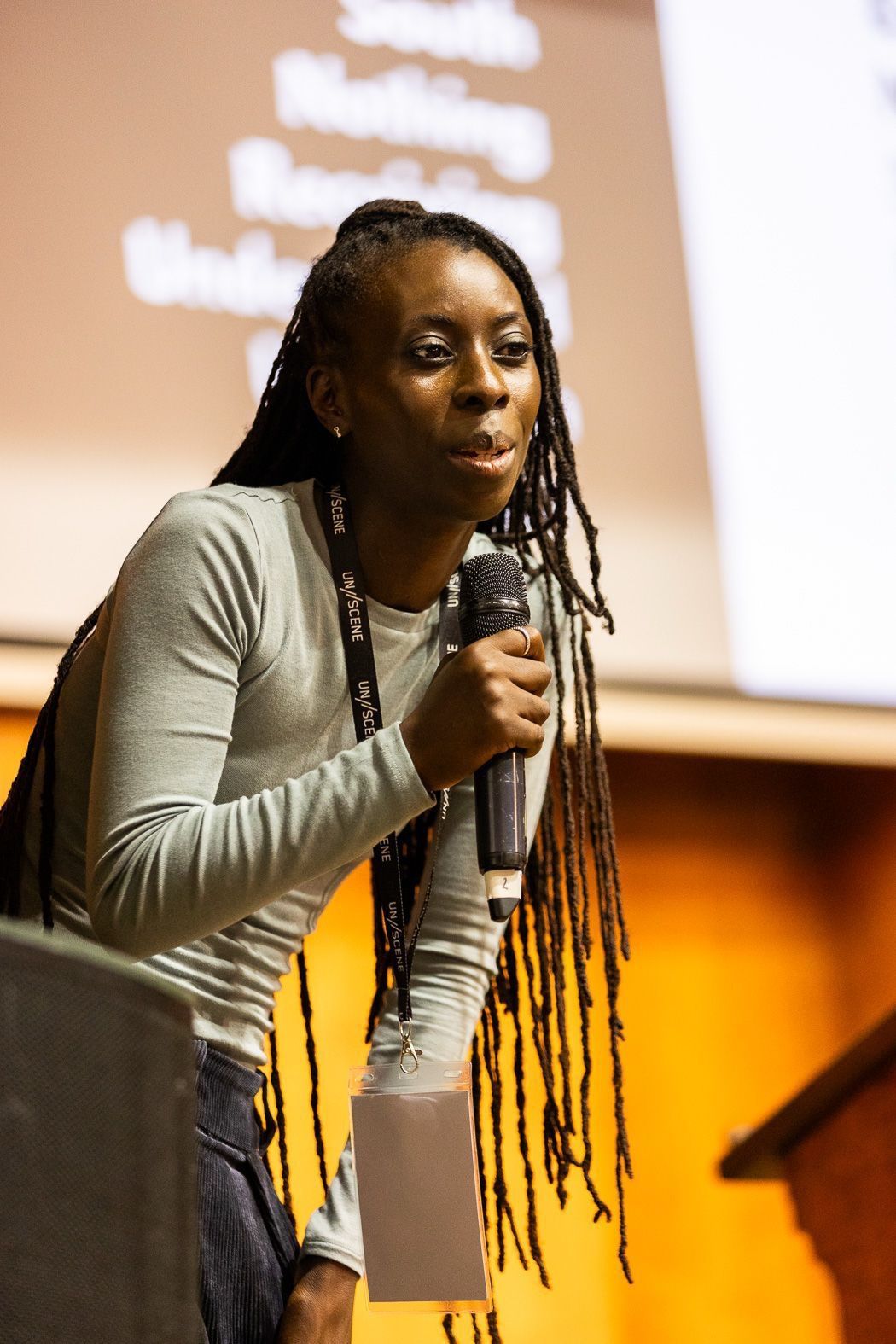
conference hall

City Hall,

LA, California

Hey I'm Najite. A narrative researcher, artist and consultant with a love of obscure history and a Master's degree in brand, communications and culture.

This programme was born of that mix.

why this, why now?
why me, why you?


There's an abundance of information on decoloniality. But not nearly enough specifically geared to branding, marketing, comms and cultural production.

With my master's and early PhD research focusing entirely on this topic, I wanted to find a way to distill these insights into a toolkit that people could really do things with.

Shortly after beginning and giving birth to my second child, I interrupted my PhD indefinitely, moving to training, consulting and collaboration with organisations globally.

Moving between academia, industry and practice in these international contexts has led to the current iteration of this programme: a movement designed to drive intentional cultural production that surfaces what unites rather than divides, while building the narrative infrastructure for the futures we want to inhabit.
What People Are Saying

Words from founders, creatives and leaders who joined the first iteration of this programme.

SAMANTHA KUDERNA-REEVES

GOOD STUFF PARTNERS

“The Decolonial by Design course was absolutely fantastic. It covered so much, delving into complex issues - presented clearly with great visuals. It's such an extensive piece of work that I think should be utilised by advertising, branding and comms teams everywhere. I 100% recommend. ”

BROOKE SMOLLEY

COPYWRITER + COACH

"The DBD course is incredibly informative, engaging, easy to follow and reinforces why I want to decolonize the way I brand myself and market my services. I definitely recommend this course to anyone looking to decolonize the way they approach marketing and branding."

LAURA TUFIS

THE MARKETING PALLETTE

"The Decolonial by Design Framework is brilliant. I love how the provocations ask critical/complex questions in a clear an concise way. It's really helped me to reflect on the work that I do with NGOs. I think it's crucial for all organisations and marcomms professionals out there."

FEELING READY?

your seat awaits

The programme relaunches October 20th 2026 at 3pm GMT.
You can save £150 on seats until October 13th.

solo seat

Ideal for first-time attendees. Includes event entry, basic networking, and access.

£325
(£175 until oct 13th)

Instant access to the programme

Personal login

Standard networking opportunities

Community welcome kit

Basic attendee support

Event updates and announcements

group seats

For teams of 5-10 people

£1625

Instant access to the programme

Individual login for team members

Priority networking opportunities

Community welcome kit

50% of agency seat revenue goes into creative cultural projects

Priority attendee support

collective seats

For teams of 10-20 people

£3250

Entry to main event

Individual login for team members, with team leader insights and management tools

VIP seating at keynotes

Exclusive networking with speakers

50% of agency seat revenue funds scholarships, collaborations and projects

Dedicated concierge support

Use code " earlybird " to save £150.
Code expires at midnight GMT on October 15th.

faqs

What happens after I purchase?

You’ll receive a confirmation email and have immediate access to the course. If you purchased for a team you’ll also have immediate access but will receive an additional email providing an option to enrol your team members individually.

Do you recommend taking it individually or in one sitting as a team?

The course has been designed to be taken individually, enabling users to dip back into the course or framework as often as they like. If you are part of a team and opt to self-study you’re encouraged to feedback and discuss as a team. But if you would like to take it as part of a team one one sitting, that’s fine too. We've had teams come through who've preferred doing it this way. Ultimately the call is yours.

We need more than 20 seats. Can you accommodate?

Sure, just drop an email to hello@decolonialbydesign.co with your request and we’ll get you set up.

How long will I/we have access to the course?

You’ll have access to the course for as long as it exists. This includes all future updates at no extra cost.

right now, your work
is shaping culture

What futures might your next creative, marketing
or strategic decision help make possible?

© 2026 Decolonial by Design. All rights reserved.

right now, your work
is shaping culture

What futures might your next creative, marketing
or strategic decision help make possible?

© 2026 Decolonial by Design. All rights reserved.

right now, your work
is shaping culture

What futures might your next creative, marketing or strategic decision help make possible?

© 2026 Decolonial by Design. All rights reserved.